 Welcome to the United Nations

UN DESA Policy Brief No. 193: Impact of the conflict in the Middle East on development financing
The conflict in the Middle East—the latest in a series of major shocks to the global economy—has hit developing countries the hardest, due to their greater economic and financial exposure and their more limited macroeconomic capacity to respond. International and domestic reforms can build on the Sevilla Commitment to strengthen resilience against future shocks. Central to this is a more responsive Global Financial Safety Net—one that draws more on pre-arranged instruments, backed by strengthened early warning systems and forecasting tools.

UN DESA Policy Brief No. 191: Institutionalizing foresight: integrating futures thinking into public sector planning
Strategic foresight and strategic planning work best together, creating an adaptive governance system that manages current volatility while preparing for future uncertainties, accelerating progress towards the 2030 Agenda for Sustainable Development, and shaping the post-2030 development framework. When foresight is properly embedded, organizations become more resilient, anticipate disruptions earlier, and make demonstrably better strategic choices under uncertainty.

UN DESA Policy Brief No. 189: Playing for the goals: advancing inclusion through the United Nations Football for the Goals Initiative
Evidence from the Football for the Goals 2024 annual reporting shows that, with supportive policies and sustained investment, football can be a cost-effective tool for advancing the 2030 Agenda, particularly by improving health, education, skills, and social inclusion for the communities and population groups most often left behind in society.

UN DESA Policy Brief No. 183: Breaking the cycle: Addressing inequalities in child survival to promote inclusive social development
As the world prepares for the Second World Summit for Social Development in November 2025, profound disparities in child health and survival persist within and among countries, making it difficult for those furthest behind to break out of mutually rein-forcing cycles of poor health, poverty and social exclusion. This policy brief explores disparities in child mortality within and among countries and provides a series of recommendations aimed at ending preventable child deaths and reducing inequalities in child survival in different contexts.

UN DESA Policy Brief No. 182: Leaving No One Behind (LNOB): A Pathway that Delivers
Amid uneven SDG progress and overlapping crises, efforts to deliver sustainable development that leaves no one behind continue to face persistent, intersecting barriers—even where commitments are strong. This policy brief highlights five dimensions where exclusion is often observed—affordability, access, governance, participation and external shocks, among others—and illustrates how governments are responding in each through policy examples and observations.

UN DESA Policy Brief No. 177: Unlocking external audits: how supreme audit institutions contribute to effective, transparent and sustainable fiscal systems for the SDGs
Effective and transparent public financial management is crucial for building trust in public institutions and mobilizing and effectively spending additional resources for sustainable development. Supreme Audit Institutions (SAIs) provide critical information and evidence to inform assessments of the performance of national fiscal systems, including in relation to SDG implementation, and to enhance the effectiveness of fiscal systems for sustainable development.

UN DESA Policy Brief No. 174: Leveraging strategic foresight to mitigate artificial intelligence (AI) risk in public sectors
By leveraging collective intelligence and scenario planning, strategic foresight exercises can help ensure that AI technologies are developed and deployed responsibly, thereby increasing the likelihood of their positive contribution to sustainable and inclusive growth. Such forward-thinking methodologies are critical to mitigating risks and harnessing AI’s transformative power in advancing the SDGs.
UN DESA Policy Brief No. 170 (Special Issue): Reimagining financing for the SDGs - from filling gaps to shaping finance
The United Nations Sustainable Development Goals are dangerously off track. The prevailing “gap-filling” approach to SDG financing has proven inadequate, failing to deliver the scale, impact or equity required. Global efforts remain fixated on mobilizing additional financing rather than embedding the SDGs at the core of economic and financial systems. Blended finance, often heralded as a silver bullet, has fallen short: public resources dominate blended deals, often de-risking private initiative in lower-risk, lower-impact projects. To redirect this trajectory, the international financing architecture must be reshaped around the SDGs.
UN DESA Policy Brief No. 169: How Shocks Turn into Crises: national policies for advancing social development in turbulent times
Shocks and crises have become more frequent, intense and widespread in an interconnected world. Looking toward the Second World Summit for Social Development in 2025, this policy brief focuses on explaining how shocks turn into crises and how national policies, supported by the international community, can help counter shocks, build resilience, and advance social development objectives, namely eradicating poverty, promoting full and productive employment, and fostering social inclusion in times of converging crises.
UN DESA Policy Brief No. 168: Net Wealth Taxes: How they can help fight inequality and fund sustainable development
Ensuring effective taxation of wealth is a tool to address inequality, increase progressivity in the tax system, and raise domestic revenues to finance sustainable development. This policy brief outlines the advantages and disadvantages of net wealth taxes, lays out some policy instruments that help in their administration, and explains why and how international tax cooperation can aid countries in successfully levying net wealth taxes.

UN DESA Policy Brief No. 166: Global action is needed to advance social development amidst converging crises
In an interconnected world, more frequent, severe and far-reaching shocks and crises are derailing key social development objectives such as poverty eradication, full employment and inequality reduction through a range of channels. Global action is needed to advance social development and build resilient and inclusive societies for all.
UN DESA Policy Brief No. 164: The integrated nature of the Sustainable Development Goals as a lever for trust, institutional resilience and innovation
Renewed efforts in enhancing policy coherence are required to leverage synergies at different levels and unleash the transformations needed to achieve the SDGs. However, public entities face challenges in identifying and leveraging SDG interdependencies and translating relevant plans into action. There are actionable ways to support integration and address existing barriers to unlock SDG progress in a way that contributes to building trust, enhancing resilience and advancing innovation.
UN DESA Policy Brief No. 163: Policy Choices for Leaving No One Behind (LNOB): Overview From 2023 SDG Summit Commitments
Prioritizing leaving no one behind (LNoB), 31 countries have introduced new policies and commitments aimed at eradicating poverty, enhancing human capital, addressing uneven access to basic necessities, improving decision-making processes on sustainable development and ensuring no country or locality is left behind.

UN DESA Policy Brief No. 162: Multilevel Governance for Climate Change Mitigation and Adaptation
Effective climate action requires multilevel governance and coordination across national, regional, and local levels of government, as well as with non-state actors, to maximize synergies and ensure inclusive, coherent approaches. By integrating equity into governance arrangements at all levels, global, national and local stakeholders can foster a more effective and sustainable response to climate change.

UN DESA Policy Brief No. 158: How can we accelerate transformations to achieve the Sustainable Development Goals (SDGs)? Insights from the 2023 Global Sustainable Development Report
Progress on the SDGs requires integrated approaches operating at a systemic level that address multiple goals simultaneously. Interventions toward progress on a given target must also generate positive synergies with other targets, while resolving tradeoffs. Transformative change does not follow a linear path, and policy needs will vary across contexts and phases of transformation. Policies should respond to impediments unique to each phase – emergence, acceleration, or stabilization.

UN DESA Policy Brief No. 157: How Can Governments Strengthen Their Relationships with Society to Meet the Sustainable Development Goals? Lessons from the COVID-19 Pandemic
The COVID-19 pandemic sparked innovation and experimentation in public institutions. Institutional and policy changes can improve Governments’ relationships with other actors and highlight opportunities to accelerate SDG progress. Renewed social contracts, built on trust, are crucial if societies are to meet today’s compounding challenges, better respond to future crises, and achieve the SDGs.
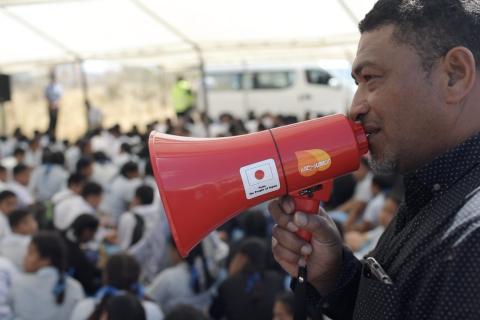
UN DESA Policy Brief No. 156: Enhancing Public Institutions’ Risk-informed Communication to address Multifaceted Crises for Disaster Risk Reduction, Resilience and Climate Action
The ability to provide accurate, timely, and reliable information to the public and responders in crises situations is central to risk-informed communication. This brief seeks to examine how to strengthen risk-informed communication for addressing multifaceted crises management, disaster risk reduction, and climate action. It identifies key challenges for strengthening government institutions that are responsible for effective communication, provides guidance on how to integrate risk-informed communication strategies into disaster management and proposes policy recommendations.
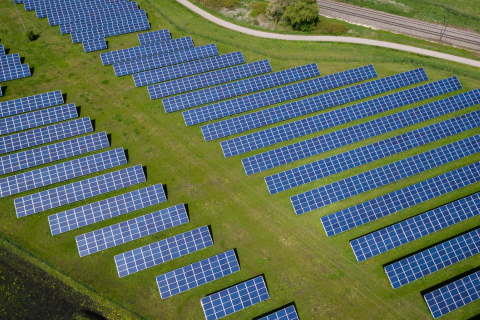
UN DESA Policy Brief Special Issue: Financing the Sustainable Development Goals through mission-oriented development banks
There is an urgent need for channeling long-term risk-tolerant finance towards achieving the Sustainable Development Goals. The paper argues that National Development Banks (NDBs) and Multilateral Development Banks (MDBs) can play a crucial role in mobilizing the needed capital.

UN DESA Policy Brief No. 149: Promoting Youth Participation in Decision-Making and Public Service Delivery through Harnessing Digital Technologies
Public institutions shall take policy measures to address challenges and build an enabling ecosystem for youth engagement and participation, with a focus on bridging the youth digital divide and supporting digital skills development of youth.

UN DESA Policy Brief No. 148: Beneficial ownership information: Supporting fair taxation and financial integrity
Public collection of beneficial ownership information, usually through a registry, is now the global standard, and all countries should build effective registries as quickly as possible. Further work remains to harmonize implementation, close loopholes, and ensure effective exchange of information.