 Welcome to the United Nations

UN DESA Policy Brief No. 185: Beyond promises: The critical role of Supreme Audit Institutions in strengthening climate accountability
This brief examines the role of SAIs within the climate accountability ecosystem, the evolution of cli-mate auditing, key findings, recommendations, and examples of impact. Despite progress in institutional frameworks and transparency, audits reveal persistent governance gaps—unclear roles, weak coordination, and inadequate monitoring—that threaten delivery on national and global climate commitments. Where audit recommendations have been implemented, they have strengthened planning, oversight, and policy coherence, helping countries move closer to their climate goals.

UN DESA Policy Brief No. 182: Leaving No One Behind (LNOB): A Pathway that Delivers
Amid uneven SDG progress and overlapping crises, efforts to deliver sustainable development that leaves no one behind continue to face persistent, intersecting barriers—even where commitments are strong. This policy brief highlights five dimensions where exclusion is often observed—affordability, access, governance, participation and external shocks, among others—and illustrates how governments are responding in each through policy examples and observations.

UN DESA Policy Brief No. 181: The role of supreme audit institutions in leaving no one behind
External audits can help Governments increase effectiveness and efficiency by identifying who is left behind and how, through recommendations in areas such as data systems and capacity-building. External audits can help Governments improve the responsiveness of programmes, services and public finance to the needs and views of all segments of the population through recommendations in areas such as planning and stakeholder engagement.

UN DESA Policy Brief No. 177: Unlocking external audits: how supreme audit institutions contribute to effective, transparent and sustainable fiscal systems for the SDGs
Effective and transparent public financial management is crucial for building trust in public institutions and mobilizing and effectively spending additional resources for sustainable development. Supreme Audit Institutions (SAIs) provide critical information and evidence to inform assessments of the performance of national fiscal systems, including in relation to SDG implementation, and to enhance the effectiveness of fiscal systems for sustainable development.

UN DESA Policy Brief No. 175: The important contribution of Supreme Audit Institutions to SDG implementation, follow up and review
Supreme Audit Institutions (SAIs) play a key role in support of the 2030 Agenda and the SDGs. As established domestic accountability institutions, they contribute to improving government performance by informing national monitoring and evaluation systems with independent evaluations of the effectiveness of policies and programmes related to the SDGs, and increasingly by assessing government’s performance on national SDG targets. Both at the national and international level, there is scope for better leveraging the information produced by SAIs on SDG implementation.

UN DESA Policy Brief No. 174: Leveraging strategic foresight to mitigate artificial intelligence (AI) risk in public sectors
By leveraging collective intelligence and scenario planning, strategic foresight exercises can help ensure that AI technologies are developed and deployed responsibly, thereby increasing the likelihood of their positive contribution to sustainable and inclusive growth. Such forward-thinking methodologies are critical to mitigating risks and harnessing AI’s transformative power in advancing the SDGs.
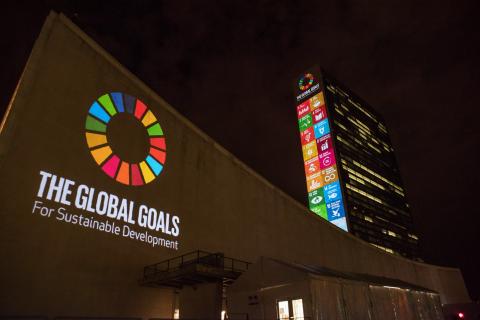
UN DESA Policy Brief No. 170 (Special Issue): Reimagining financing for the SDGs - from filling gaps to shaping finance
The United Nations Sustainable Development Goals are dangerously off track. The prevailing “gap-filling” approach to SDG financing has proven inadequate, failing to deliver the scale, impact or equity required. Global efforts remain fixated on mobilizing additional financing rather than embedding the SDGs at the core of economic and financial systems. Blended finance, often heralded as a silver bullet, has fallen short: public resources dominate blended deals, often de-risking private initiative in lower-risk, lower-impact projects. To redirect this trajectory, the international financing architecture must be reshaped around the SDGs.