 Welcome to the United Nations
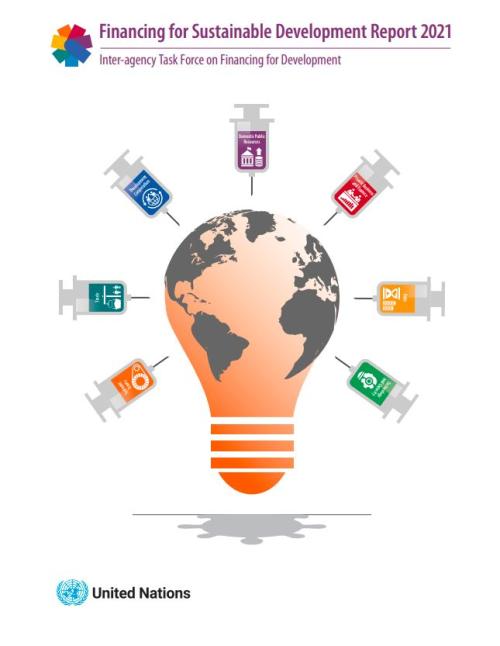
The COVID-19 pandemic is leading to an even more sharply unequal world as the development gains for millions in poor countries are reversed, according to a new report released by the United Nations today.
The Financing for Sustainable Development Report 2021 says the global economy has experienced the worst recession in 90 years, with the most vulnerable segments of societies disproportionately affected. An estimated 114 million jobs have been lost, and about 120 million people have been plunged back into extreme poverty.
Only immediate action can prevent a lost decade for development for many countries.
“What this pandemic has proven beyond all doubt is that we…
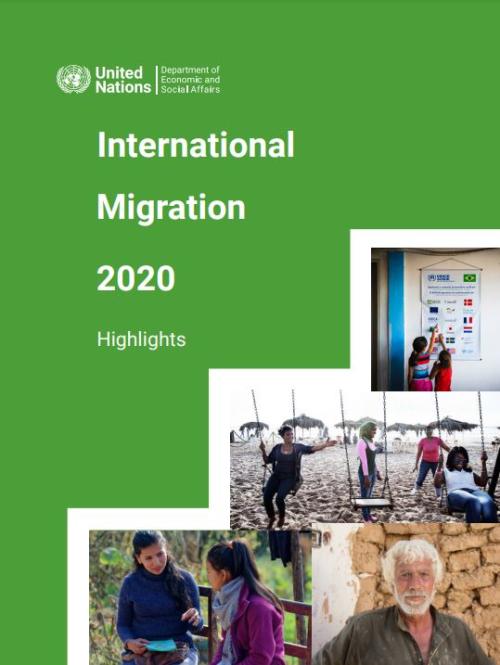
COVID-19 has disrupted all forms of human mobility through the closing of national borders and halting of travel worldwide. Preliminary estimates suggest that the pandemic may have slowed the growth in the stock of international migrants by around two million by mid-2020, 27 per cent less than the growth expected since mid-2019, according to a report by the United Nations released today.
Growth in the number of international migrants has been robust over the last two decades, reaching 281 million people living outside their country of origin in 2020, up from 173 million in 2000 and 221 million in 2010. Currently, international migrants represent about 3.6 per cent of…
This UN/DESA-UNCDF Handbook represents a significant contribution to the Financing for Sustainable Development agenda, advancing both thought leadership and action. Finalized in the crucible of the COVID-19 crisis, the Handbook brings global visibility to infrastructure asset management as a critical, high impact area for investing in local capacities to mobilize and manage financing for sustainable development, including in emergencies.
With trendy focus on the ‘new and shiny’, old assets often go neglected, while new ones are built without putting in place effective asset management frameworks. Underinvestment in infrastructure maintenance has been estimated to cost some…
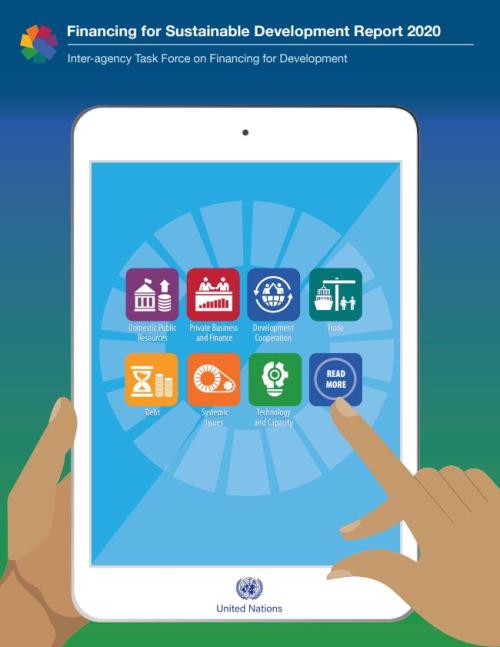
Governments must take immediate steps to prevent a potentially devastating debt crisis and address the economic and financial havoc wrought by the COVID-19 pandemic – says a new report from the United Nations-led Inter-Agency Task Force on Financing for Development.
The UN System’s 2020 Financing for Sustainable Development Report outlines measures to address the impact of the unfolding global recession and financial turmoil, especially in the world’s poorest countries. Its recommendations are based on joint research and analysis from the UN System, the International Monetary Fund, World Bank Group, and more than 60 UN agencies and international institutions.
Even before…
The world’s population is expected to increase by 2 billion persons in the next 30 years, from 7.7 billion currently to 9.7 billion in 2050, according to a new United Nations report launched today.
The World Population Prospects 2019: Highlights, which is published by the Population Division of the UN Department of Economic and Social Affairs, provides a comprehensive overview of global demographic patterns and prospects. The study concluded that the world’s population could reach its peak around the end of the current century, at a level of nearly 11 billion.
The report also confirmed that the world’s population is growing older due to increasing life expectancy and…
The United Nations Manual for the Negotiation of Bilateral Tax Treaties between Developed and Developing Countries (2019) is a compact training tool for beginners with limited experience in tax treaty negotiation. It seeks to provide practical guidance to tax treaty negotiators in developing countries, in particular those who negotiate based on the United Nations Model Double Taxation Convention between Developed and Developing Countries. It deals with all the basic aspects of tax treaty negotiation and it is focused on the realities and stages of capacity development of developing countries.
While every country should form its own policy considerations and define…
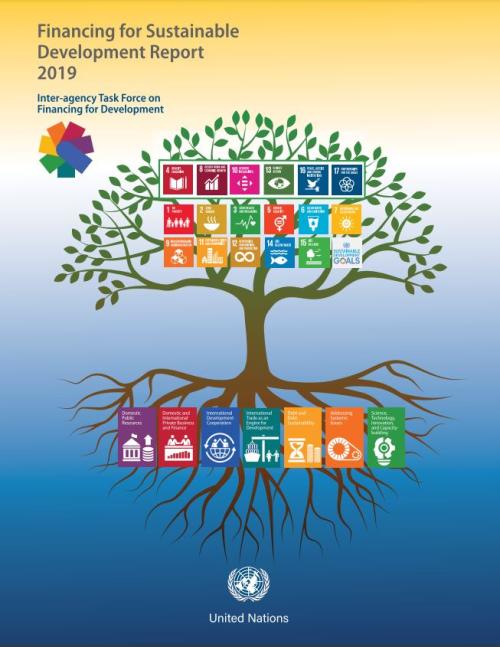
The 2019 Financing for Sustainable Development Report (FSDR) of the Inter-agency Task Force on Financing for Development warns that mobilizing sufficient financing remains a major challenge in implementing the 2030 Agenda for Sustainable Development. Despite signs of progress, investments that are critical to achieving the Sustainable Development Goals (SDGs) remain underfunded and parts of the multilateral system are under strain.
The FSDR recommends that the international community should use this opportunity to reshape both national and international financial systems in line with sustainable development. If we fail to do so, we will fail to deliver the 2030…
Today, 55% of the world’s population lives in urban areas, a proportion that is expected to increase to 68% by 2050. Projections show that urbanization, the gradual shift in residence of the human population from rural to urban areas, combined with the overall growth of the world’s population could add another 2.5 billion people to urban areas by 2050, with close to 90% of this increase taking place in Asia and Africa, according to a new United Nations data set launched today.
The 2018 Revision of World Urbanization Prospects produced by the Population Division of the UN Department of Economic and Social Affairs (UN DESA) notes that future increases in the size of the…
The 2018 report of the Inter-agency Task Force on Financing for Development finds that most types of development financing flows increased in 2017, and that there has been progress across all the action areas of the Addis Ababa Action Agenda. This progress was underpinned by an upturn in the world economy, but at the same time the report warns that risks could derail development progress and structural impediments continue to undermine sustainable development prospects.
The 2018 report provides policy options which, if implemented, would put the world on a sustained and sustainable growth and development path. It also examines the financing challenges to the SDGs under…
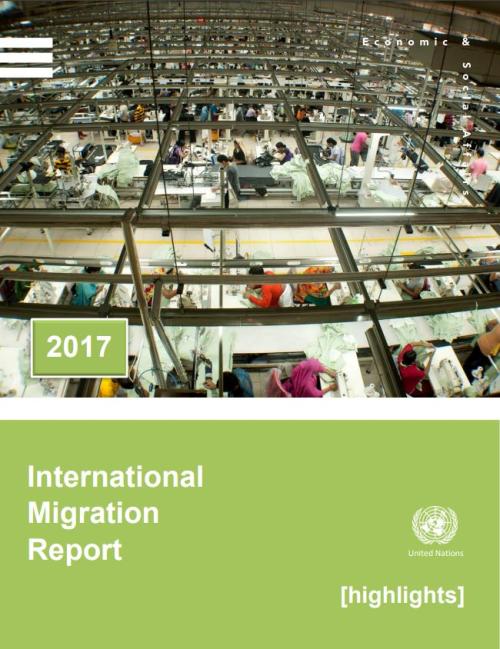
There are now an estimated 258 million people living in a country other than their country of birth — an increase of 49% since 2000 — according to new figures released by UN DESA today, on International Migrants Day. The International Migration Report 2017 (Highlights), a biennial publication of the department, states that 3.4% of the world’s inhabitants today are international migrants. This reflects a modest increase from a value of 2.8% in 2000. By contrast, the number of migrants as a fraction of the population residing in high-income countries rose from 9.6% in 2000 to 14% in 2017.
The report reviews the latest migration trends, assesses the demographic contribution of…
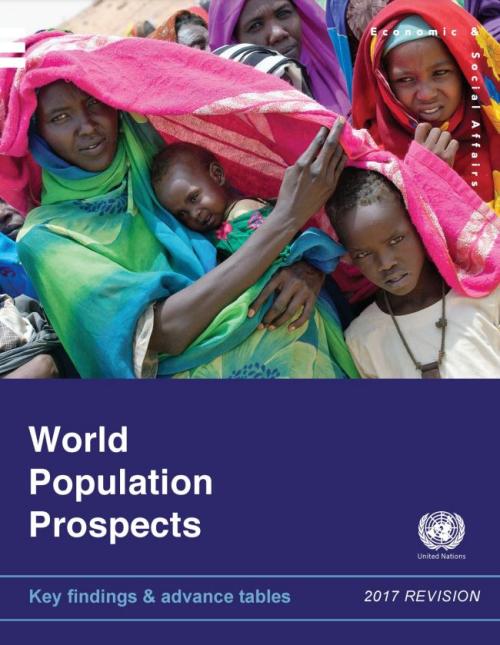
The current world population of 7.6 billion is expected to reach 8.6 billion in 2030, 9.8 billion in 2050 and 11.2 billion in 2100, according to a new United Nations report being launched today. With roughly 83 million people being added to the world’s population every year, the upward trend in population size is expected to continue, even assuming that fertility levels will continue to decline.
The World Population Prospects: The 2017 Revision, published by the UN Department of Economic and Social Affairs, provides a comprehensive review of global demographic trends and prospects for the future. The information is essential to guide policies aimed at achieving the new Sustainable…
Continued slow global economic growth is likely to leave about 6.5 per cent of the world population extremely poor in 2030 without national actions supported by international cooperation, according to a new report issued by the United Nations today.
A continuation of the status quo would severely hamper efforts to achieve the Sustainable Development Goals by 2030. The Goals call for eliminating poverty by 2030.
According to the 2017 “Financing for Development: Progress and Prospects” report, under current trends, least developed countries (LDCs) are likely to fall short by large margins.
Projections indicating that global gross product will grow at less than 3…